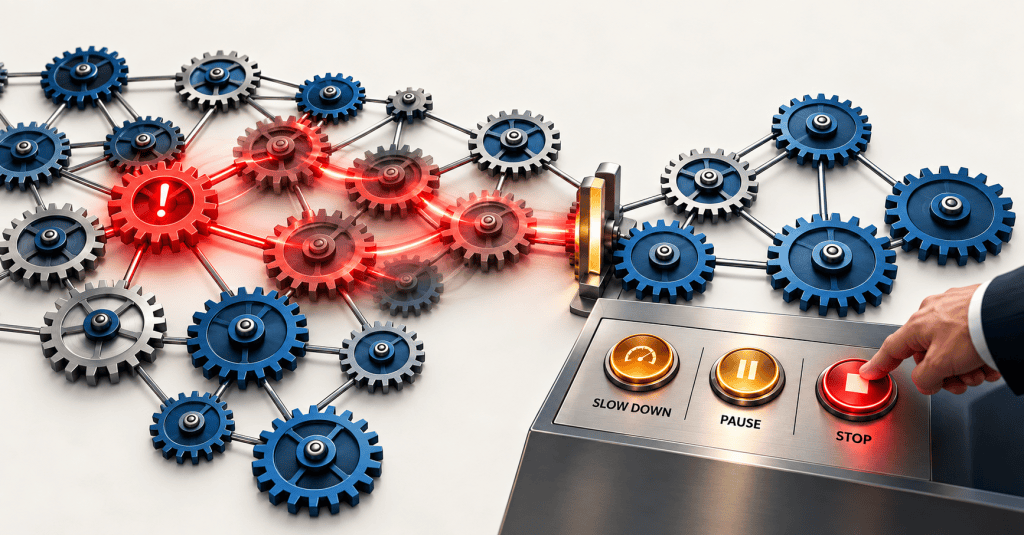
AI can metastasise errors at a scale and speed we’ve never experienced before. Deciding when to slow down, pause or stop its use is essential to preventing one flawed decision from setting many others in motion.
The Power of One Decision
I am all about the power of everyday decisions. I am a big advocate of the idea that we can improve the quality of our everyday lives by improving the quality of our decisions, in particular the decisions we make every day.
Some of you may be familiar with two DrSharnaisms:
- “Focus on the everyday, rather than the someday.”
- My contribution is to “Make the world a better place, if not less sh*t, one decision at a time.”
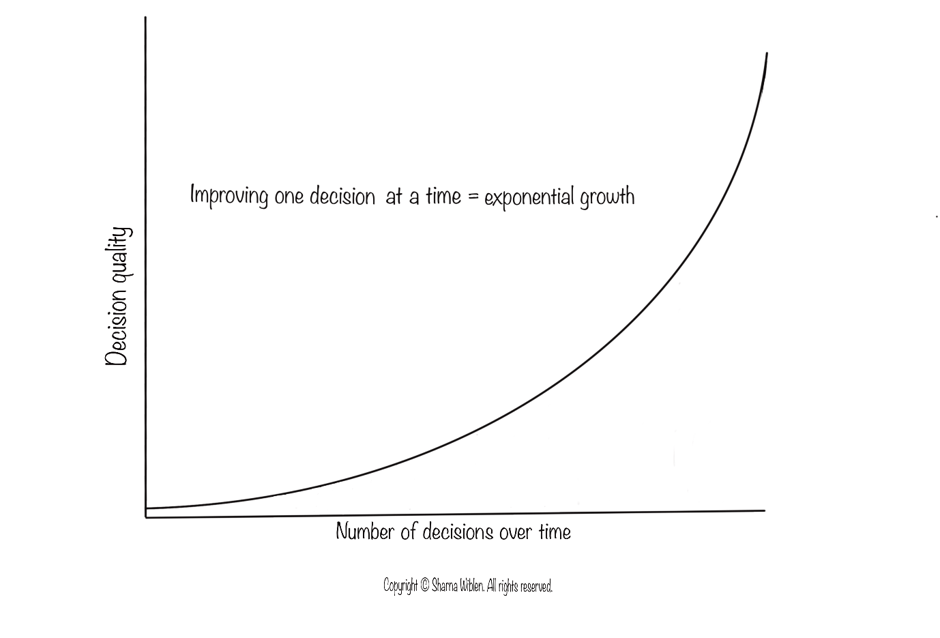
ReThinking Talent Decisions shares many of my ideas about the potential (positive) power of focusing on and improving one decision at a time. I use an analogy of interconnected gears (see page XXIV), with each gear representing a decision. When set in motion, the gears initiate a chain reaction that spans individuals, teams, organisations and societies. The moving gears symbolise each decision’s transformational power. The gears become larger and more intricate as they progress, representing the exponential growth that responsible decision-makers can achieve.
Elevating the quality of our decisions yields many positive outcomes, both in the immediate and long term. These benefits are twofold: direct and residual. Better decisions enrich our decision-making processes, improving experiences and outcomes in our daily lives. Additionally, the residual impact extends to the careers and livelihoods of those around us, influencing their paths in indirect, unknown and potentially immeasurable ways.
This is why I talk about the power of one decision – we can harness the power of exponential returns, one decision at a time.
The Power of One Decision Goes Both Ways
But the more I talk with and consult for decision makers about AI, the more I am reminded of the other side of this argument:
AI helps us metastasise errors on a scale and at a speed that we’ve never experienced before.
When AI is involved in a decision, one questionable assumption need not stay contained within one decision. It can be applied repeatedly, embedded in a workflow and passed between systems. But by the time someone notices the consequences, many other gears may already be turning.
This makes knowing when to slow down or stop an essential part of AI governance.
Know When to Slow Down, Pause or Stop
Before expanding AI’s use, you should be able to answer:
- When should we slow down? What signals tell us to limit the scale or speed of AI use, increase human involvement or review more decisions before proceeding?
- When should we pause? What concerns require us to temporarily suspend a is involvement in a decision or workflow while we investigate? What must we understand, correct and verify before resuming?
- When should we stop? What findings tell us that AI should no longer be used for a particular decision or purpose? Who has the authority to end its use and how will the work be completed instead?
The answer to this question should inform a specific policy that stipulates who can act, when they must act and how each response will be put into practise. These decisions need to be made while there is time to think carefully. If you wait until something goes wrong, the pressure to keep moving may make it harder to slow down, pause or stop.
Check for Scaling Errors and Address Their Consequences
A practical place to start is to choose one consequential decision in which AI is already involved. Map the decisions that follow from that, the interconnected gears, and identify where an error could be repeated, passed to another system or used to inform subsequent decisions.
Then define the signals that would trigger slowing down, pausing, or stopping; name the people authorised to act; and test whether they can intervene before more decisions are affected. Start with a limited scope, review actual outcomes, and expand only when those outcomes meet the required quality.
If you identify an error, examine the decisions already made and those that relied on them. Turning AI off prevents further use; it does not automatically correct the consequences already set in motion. Preventing negative compounding returns requires interrupting the error and addressing the decisions through which it has spread.
The promise of AI is that good decisions can reach further. Its risk is that poor decisions can, too. If we are serious about improving decision quality, we need to design for both possibilities, including the bravery to stop and turn AI off.

